Tidy Tenant guide: cleaning tools and furniture preferences
Match cleaning tools to stains, finish both cleanup requirements and choose furniture using the current tenant’s preference tags.
Tidy Tenant rules and controls · Play Tidy Tenant
Separate cleaning from decorating
A job has two different kinds of work. Cleaning asks you to remove dirt and loose clutter; decorating asks you to satisfy the tenant’s preferences. Finishing one does not automatically finish the other. Read the current job and the requirements displayed before committing time or coins.
During cleaning, drag over dirt and tap scattered items to put them away. Follow both progress indicators. If the room looks clean but does not advance, inspect unfinished pickup items and small remaining patches instead of repeatedly tapping the decoration controls.
Use the tool for the stain
The rule table maps dust to the rag, grease to the sponge, spills to the mop and leaks to the wrench. Early rooms may offer only a subset of those tools. Later jobs introduce other surfaces and constraints, so a method that worked in the first room may not fit the next job.
When a leak is present, treating only the visible water does not address the source. Check the active tool and the current problem before another wipe. Wrong-tool, inspection, patience and flooding failures are distinct outcomes; use the message shown to decide what to change.
Buy for a preference rather than a price
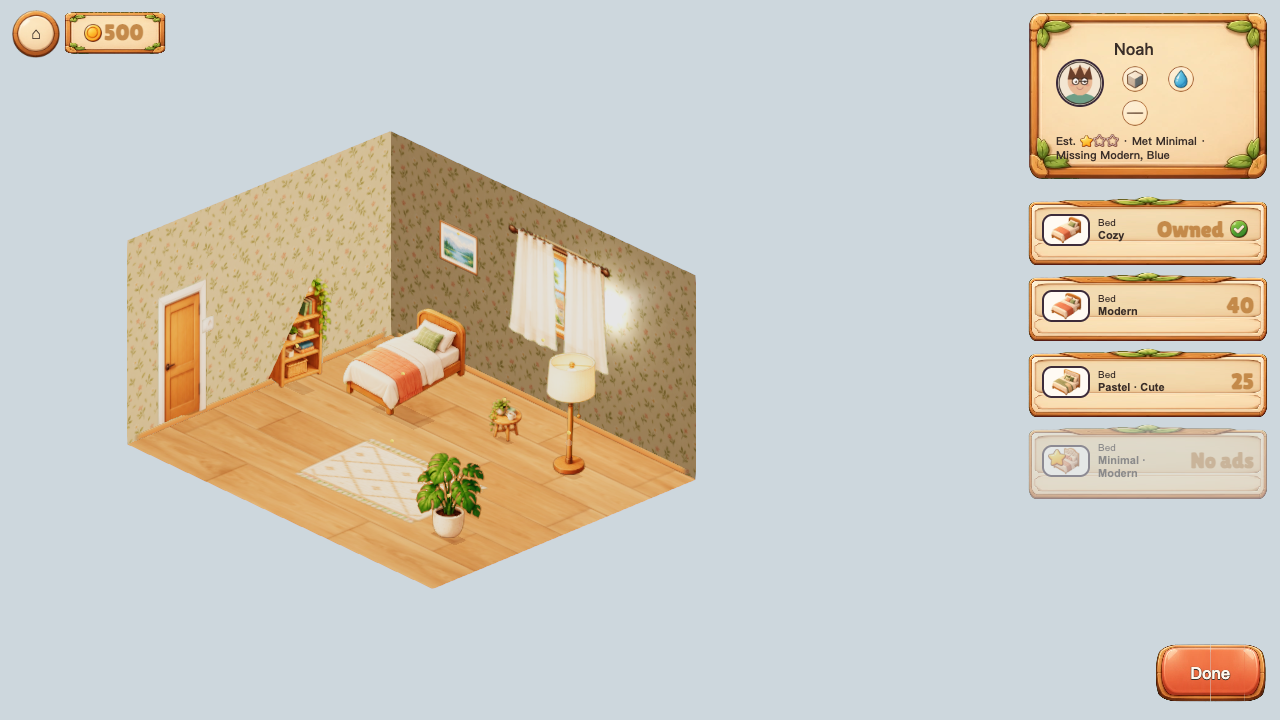
Furniture carries tags such as cozy, plants, warm, modern, blue, minimal, pastel, cute or soft. Compare the current tenant’s requested tags with the options for each furnishing position. An expensive item can still be a poor preference match.
Use the displayed estimate and matched or missing indicators while composing the room. A controlled approach is to change one furniture choice, inspect the match change, then decide whether that purchase is useful. Keep enough coins for a choice that covers a missing need rather than spending everything on an unrelated upgrade.
Handle later jobs deliberately
Where a job involves two tenants, check both sets of preferences. Satisfying only the first person is not a substitute for covering both requirements. Where a patience or inspection condition is shown, include it in your plan before you start cleaning.
After the result, distinguish a cleaning failure from a decoration mismatch. Retry the part that caused the problem: a better-looking room does not repair a wrong-tool sequence, and faster wiping does not make incompatible furniture match a tenant. The live floor plan is the source for currently available rooms and jobs.
Continue playing
A cleaning and decorating game. The floor plan shows the rooms and jobs available in the current release; later jobs introduce different tools and constraints.
Try the next attempt in Tidy Tenant. For a different game, browse the guide library. Report a rule that no longer matches the game through player support.